Small Business Hiring: A Realistic Guide to Making Your First (or Next) Hire
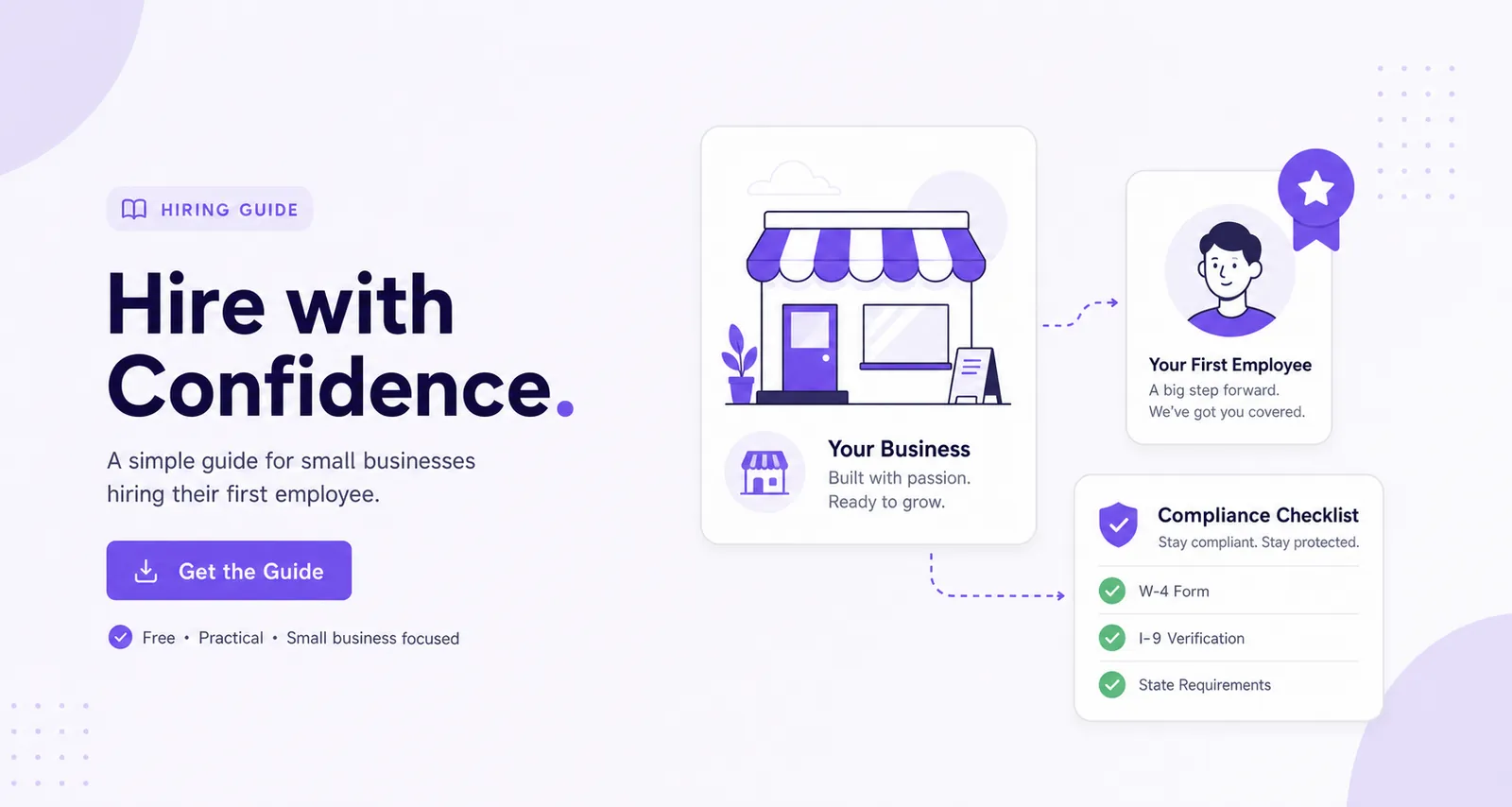
The first time you hire someone, nobody hands you a manual. You're running the register, doing the books, maybe still doing the thing the business actually sells, and now you also have to figure out how to hire employees for small business — with none of the infrastructure a bigger company takes for granted. No HR department. No applicant tracking system someone else configured. No recruiter down the hall. Just you, a job that needs doing, and a growing pile of applications you don't have time to read carefully.
We've watched this play out at dozens of small operations — a five-person dental office, a landscaping crew, a three-location bakery, a two-person software shop that finally needed a third person. The pattern repeats: owners either hire too fast out of panic, or wait too long because hiring feels like a project they can't afford to get wrong. Both cost money. The fix isn't a bigger budget. It's a process that's honest about what you have and don't have.
This guide walks through the actual sequence — when to hire, what's legally required before you post a job, how to run a hiring process without a dedicated recruiter, and how to compete for talent against companies with ten times your budget. We'll flag where posting the role for free and letting AI agents rank who applies saves you the most time, because for a small business, time is the one resource you truly cannot buy back.
Post your first job free
No subscription, no recruiter fee. Post the role and let Jobedly's AI agents score every applicant 0–100 so you see your best options first.
Post a job freeBefore You Hire — Is It Actually the Right Time?
Every owner asks this too late or too early. Too late looks like: you're turning down work, your best employee is burning out covering gaps, and customers are noticing slower service. Too early looks like: you hire because you're busy this month, then can't cover payroll two months later when the surge passes. Neither is really a hiring problem — it's a demand-forecasting problem wearing a hiring costume.
The honest test is whether the extra work is structural or seasonal. Structural means it's still there in three months even if this week's rush ends — a new location, a contract that repeats, a service line that isn't going away. Seasonal means it's a spike. Seasonal spikes usually call for contractors, temp staff, or overtime for existing people, not a full-time hire with all the fixed costs that come with one.
How to hire your first employee
Your first hire is different from your fifth, because you're not just filling a role — you're building the muscle of being an employer. Before you write the posting, get four things straight: what the role actually does day to day (not a wish-list of everything you personally do), what you can pay, whether you need an employee or a contractor, and whether your business is legally set up to have payroll at all. That last one trips up more first-time employers than anything else — plenty of solo operators haven't registered for an EIN or set up state unemployment insurance because they've never needed to until now.
There's a second version of this mistake that's less obvious: owners who wait to hire because they're afraid of getting the timing wrong, and end up understaffed for months while they deliberate. If the demand is structural — meaning it's still there next quarter even after this week's rush fades — the cost of waiting almost always exceeds the cost of hiring a beat early. You can course-correct a hire that isn't working out faster than you can recover the customers or revenue lost to being short-staffed for half a year.
One more thing worth saying plainly: your first hire changes your job, not just your headcount. You go from doing the work to also managing someone doing the work, and that's a real skill shift, not an automatic byproduct of finding a good candidate. Budget your own time for this — a few hours a week of actual management attention in the first month, not just a Slack message when something goes wrong.
The Legal and Setup Checklist (EIN, Payroll, Compliance)
This part isn't optional and it isn't fast if you leave it until the offer stage. The IRS — Employer ID Numbers is the first thing you need if you don't already have one — it's your federal identifier for tax purposes, and you'll need it to run payroll, withhold taxes, and report new hires to your state. Getting one online typically takes minutes, not days, so there's no excuse to still be missing it once you've decided to hire.
- EIN — required before you can legally pay an employee.
- State new-hire reporting — most states require you to report new employees within a set window after their start date.
- Workers' compensation insurance — required in nearly every state once you have employees, even part-time.
- Payroll setup — a payroll provider or accountant to handle withholding, unemployment tax, and pay stubs correctly.
- Employment eligibility verification (Form I-9) — required for every employee, collected on or before their first day.
- State and local posting/notice requirements — many states require specific workplace notices once you have staff.
The U.S. Small Business Administration — hire employees maintains a practical walk-through of this sequence and it's worth reading once in full even if you skim the rest of this page — it covers the parts that vary by state, which a generic guide like this one can't responsibly promise to cover for your specific location.
Timing matters more than people expect here. Some of these steps have processing windows — a workers' comp policy doesn't bind the moment you request it, and some state new-hire reporting has a strict deadline measured in days, not weeks, after a start date. Start this checklist as soon as you've decided to hire, in parallel with writing the job description, not after you've already picked a candidate and are trying to get them started next Monday.
Do I need HR to hire?
No — but you need someone playing the HR role, even if it's you for twenty minutes a week. What HR actually protects you from is inconsistency: different questions for different candidates, undocumented reasons for rejecting people, informal pay negotiations that create resentment later. You don't need a department. You need a habit — the same core questions for every candidate in a role, a simple written record of why you made the call, and pay bands you decided on before you started interviewing, not while you were negotiating with your favorite candidate.
Hiring Without an HR Team or a Big Budget
Cost of hiring an employee is the question every owner Googles right before they flinch. The number that gets thrown around most often — often cited near $4,000+ per hire when you count job-board fees, screening time, interview hours, and onboarding — comes from broader workforce research aggregated by groups like SHRM, and it's built mostly from mid-size and large employer data. Your real cost is usually lower in dollars but higher in owner time, because you're the one doing the sourcing, screening, and interviewing that a corporate recruiter would otherwise absorb.
| Cost category | Big company | Small business reality |
|---|---|---|
| Job board fees | Often paid, sometimes bulk contracts | Can mostly be avoided — free posting on Jobedly and similar platforms covers this |
| Recruiter time | Dedicated in-house recruiter | Owner or manager's own hours, pulled from running the business |
| Screening | ATS + recruiter pre-screen | Manual resume reading unless you use AI ranking tools |
| Bad-hire cost | Absorbed across a larger team | Felt immediately — one bad hire can disrupt a five-person team badly |
| Onboarding | Structured HR program | Informal, owner-led, easy to skip under time pressure |
How to hire employees with no money
"No money" usually means no budget for job boards, agencies, or a recruiter — not literally zero dollars. You still have levers: post free where you can, lean hard on referrals from your current best people (they know who's good and who isn't, and they vouch with their own reputation), and be visible in the specific place your candidates already spend time — the trade association, the community college program, the local Facebook group for the trade. Paid sourcing buys you reach. Free sourcing works when you already have some trust built into a niche.
This is also where the "free to post" model changes the math for a small operation more than any other single tactic. If you can post the role at no cost and let AI agents rank who applies, you've removed the biggest line item in that cost table without touching quality — the screening still happens, it's just automated instead of manual.
We'd also push back gently on the idea that a small operation needs a fundamentally different hiring process than a bigger company — it needs a lighter one, not a worse one. The core sequence still holds: a clear description of the job, a way for the right people to see it, a consistent way to evaluate who applies, and a fast decision. What changes for a small business is who does each step, not whether the step matters. Skipping steps because you're small is how you end up re-hiring the same role twice in a year.
Skip the job-board bill entirely
Post your role free on Jobedly and let AI agents rank who applies — the biggest cost line in small-business hiring, gone.
Post a job freeCompeting With Big Employers on More Than Pay
You will lose a pure salary fight against a company with corporate scale, most of the time. That's not the fight to pick. Small businesses win on things large employers structurally can't offer: real schedule flexibility decided by a person who can say yes on the spot, visible impact (your fifth employee changes how the whole place runs — employee #5,000 at a big company doesn't), faster decision-making, and a boss who's actually reachable. These aren't consolation prizes. For a meaningful share of candidates, they're the deciding factor.
- Say the pay range in the posting — it's the single biggest filter for serious applicants and it signals you're not going to waste their time.
- Describe what changes about the job in year one, not a static list of duties — small teams evolve fast and candidates want to know they'll grow with it.
- Be explicit about flexibility if you have it. Big employers often can't compete here even when they want to.
- Move fast. A small business that interviews within days, not weeks, wins candidates who'd otherwise take the first offer from anyone.
Small business hiring process, end to end
- Confirm the need is structural, decide pay range, confirm legal/payroll setup is ready.
- Write a short, honest job description — see our guide to writing a job description for the exact structure that filters well without scaring off good candidates.
- Post free and let ranking do the first pass — see how to post a job for free for the fastest path.
- Screen the top-ranked applicants against 3–4 must-haves, not a wish list.
- Run one structured conversation, not three rounds — small teams rarely need a five-stage funnel.
- Check references quickly, make the offer, and have onboarding ready before day one.
Onboarding That Sticks
Most small-business turnover in the first ninety days isn't a hiring mistake — it's an onboarding gap. New hires quit small businesses at a noticeably higher rate in the early weeks when nobody planned their first two weeks beyond "show up and we'll figure it out." That's fine for you, because you already know how everything works. It's disorienting for them.
A workable small-business onboarding plan doesn't need software. It needs three things written down before their first day: what they'll actually do in week one (specific tasks, not "get settled in"), who answers their questions when you're busy, and one check-in at the two-week mark that isn't just "how's it going" but a real conversation about what's unclear. That third one gets skipped constantly and it's the cheapest fix on this entire page.
Once someone's in the seat, the retention math changes everything else on this page. A hire who leaves in month two erases whatever you saved by hiring cheaply, and you're back to square one — posting, screening, interviewing — except now with a gap in coverage you didn't have before you started. Treat onboarding as part of the hiring process, not a separate step that happens after hiring is "done."
If you're hiring for a second, third, or fifth role rather than your very first, the same logic scales — you just get to reuse more of what you built. Save the checklist, the job description template, and the onboarding plan from this hire, and the next one takes a fraction of the setup time. Most of the effort in small-business hiring is front-loaded into building the process once. After that, each hire is mostly execution, and execution is the part AI screening and a clear checklist actually make fast.
The other sibling guides in this hiring series cover the pieces that plug directly into this process — writing the job description itself, and screening applicants once they start coming in. Neither requires an HR department. Both benefit enormously from being done the same way every time.
Post once. Let the AI agents do the sorting.
Post a job free on Jobedly and our AI agents surface and rank qualified candidates 0–100 so you spend time on the shortlist, not the pile.
Post a job freeFrequently asked questions
How much does it cost to hire an employee for a small business?
Do I need an EIN to hire my first employee?
How do I hire employees with no money for job ads?
Should I hire an employee or a contractor?
What's the minimum small business hiring process I actually need?
How do small businesses compete with big companies for talent?
Do I need HR to hire my first employee?
How long should small business onboarding take?
Glossary
- EIN (Employer Identification Number)
- A federal tax ID issued by the IRS, required before a business can legally run payroll or report a new hire.
- Cost-per-hire
- The total direct and indirect cost of filling one role, including job ad spend, screening time, interviewing, and onboarding.
- New-hire reporting
- A state requirement to report newly hired employees to a state agency within a set window after their start date, used for child-support enforcement and unemployment tracking.
- Workers' compensation insurance
- Insurance covering employee injuries on the job, required in nearly every state once a business has employees.
- Structural vs. seasonal demand
- Structural demand persists beyond a short-term spike and justifies a permanent hire; seasonal demand is temporary and better solved with contractors or overtime.
- Form I-9
- The federal form used to verify an employee's identity and legal authorization to work in the U.S., required for every hire.