How to Change Careers (Even If It Feels Late)
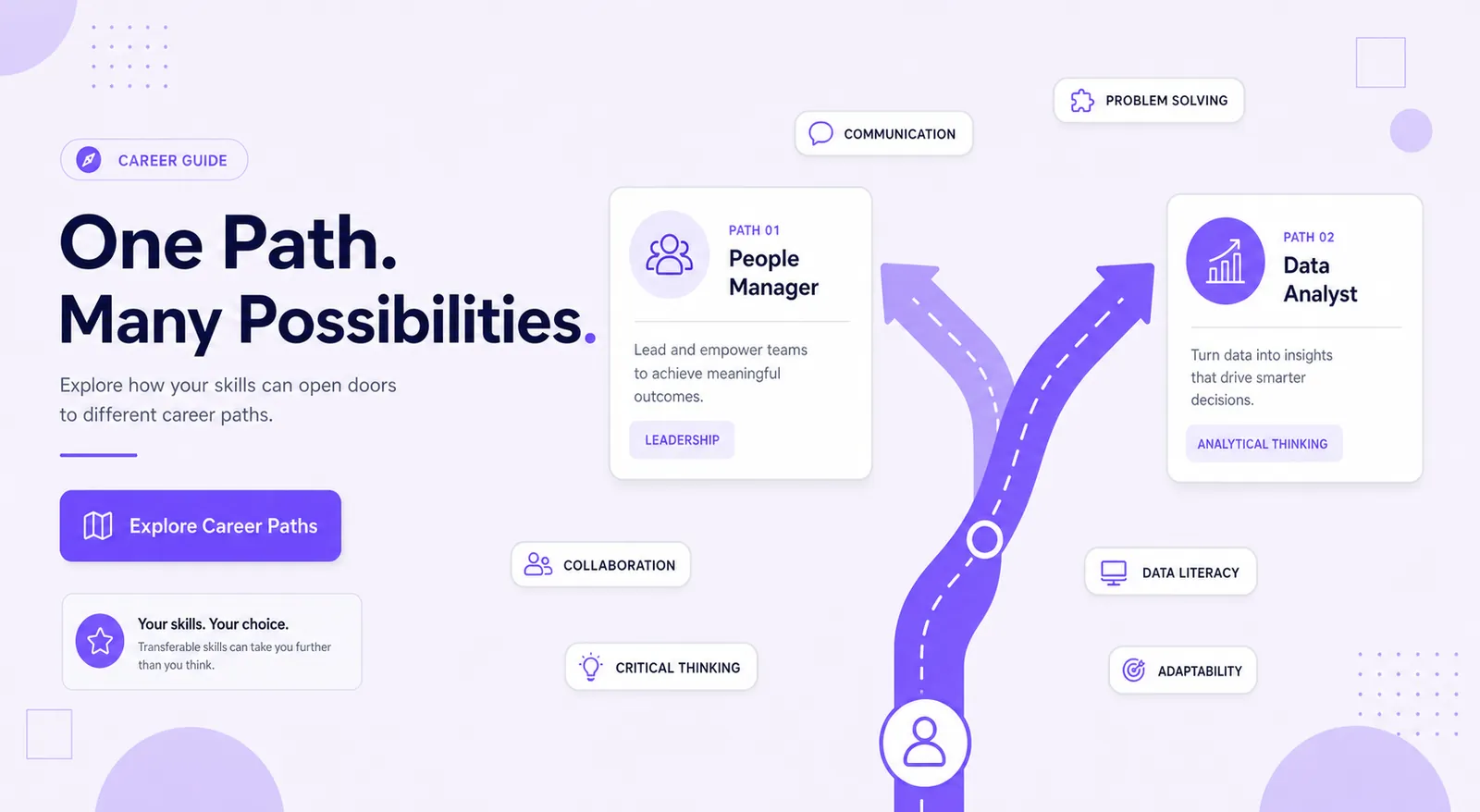
We've talked to plenty of people convinced their entire work history is a liability the moment they decide to switch fields. It almost never is. Learning how to change careers successfully is less about starting over and more about translating what you already know into language a new industry recognizes — and that translation is a skill you can actually get good at.
This guide walks through auditing your transferable skills honestly, reframing a resume for a pivot instead of hiding your old title, closing real skill gaps efficiently, explaining the switch in an interview without sounding defensive, and setting a timeline and pay expectation that won't blindside you six months in.
The hardest part of a career change is usually the first application — figuring out how to position experience that doesn't map cleanly onto the new job title. Jobedly's agents rewrite your resume to highlight the transferable parts a new industry actually cares about, in seconds, not hours.
Get your pivot resume built for you
Jobedly rewrites your resume to surface the transferable experience that matters for your new target role — your first tailored resume is free.
Build a winning resume freeAuditing transferable skills
Before you touch a resume, do the audit honestly, on paper, away from any job posting. List every skill from your current or past roles that isn't tied to a specific tool or industry — things like project coordination, client negotiation, data analysis, people management, budget ownership, process design. These are the skills that move with you.
Then separate those from the skills that are genuinely industry-specific — the ones that won't transfer and that you'll need to either learn or work around. Being honest about this split early saves you from either underselling yourself ("I have no relevant experience") or overselling yourself into an interview you can't actually back up.
If you're weighing which field to pivot toward and not just how, it's worth checking projected growth before you commit months to a switch. The BLS Occupational Outlook Handbook publishes growth and outlook data by occupation, and it's a far more reliable gut-check than anecdotal impressions of which fields are "hot" right now.
| Old-field skill | How it translates | New-field language |
|---|---|---|
| Managed vendor relationships and SLAs | Cross-functional coordination under deadline pressure | Stakeholder management, roadmap prioritization |
| Built process documentation for a 20-person team | Structured thinking, systems documentation | Product requirements, process design |
| Owned a departmental budget | Resource tradeoff decisions under constraint | Prioritization, scoping tradeoffs |
| Resolved escalated customer complaints | Direct problem diagnosis under pressure | User research, issue triage |
A good test for whether a skill is genuinely transferable: describe it without naming your old industry at all. If you can still explain it clearly — "I coordinate multiple moving deadlines across people who don't report to me" instead of "I managed restaurant shift schedules" — it's a skill that travels. If the description falls apart without the industry context propping it up, it's probably one of the industry-specific pieces you'll need to either translate more carefully or build fresh in the new field.
Reframing your resume for a pivot
A career-change resume needs a different structure than a same-lane resume. Leading with a chronological list of job titles in an unrelated field usually undersells you before the reader gets to the substance. Instead, lead with a summary that states your target directly and names the transferable strength up front, then let your bullet points speak in the new field's language wherever honestly possible.
Career change resume with no experience
If you have literally zero direct experience in the new field, lean on three things: a skills-forward summary, any adjacent projects (freelance work, volunteering, courses, personal projects) reframed as real proof points, and a clear, short statement of why you're making the switch. Don't apologize for the pivot in the resume itself — save the narrative explanation for the cover letter and interview, and let the resume do the proving.
This is exactly where a well-written cover letter earns its place — it's the tool built for explaining context a resume can't hold gracefully. For the resume itself, our guide on how to write a resume that beats the ATS covers formatting that keeps a pivot resume readable to both software and humans.
Closing skill gaps fast
Identify the two or three gaps that actually block you from being hireable — not every possible skill the new field could theoretically want. A gap analysis that tries to fix everything before applying anywhere is how career changes stall out for a year or more.
A quick way to sort real gaps from imagined ones: reread five or six job postings in your target field and note which requirements show up consistently versus which appear once and never again. The recurring ones are your actual gaps. The one-off outlier requirement on a single posting is rarely worth months of your time closing — that's usually one hiring manager's personal wishlist, not a field-wide standard.
- A short, credible certificate or course in the specific tool or method the new field uses most — pick one that's recognized in that industry, not just convenient.
- A small personal or volunteer project that produces something you can point to directly, even unpaid — proof beats a certificate alone.
- Informational conversations with two or three people already doing the job, to sanity-check which gaps actually matter to hiring managers versus which ones you're assuming matter.
- Freelance or contract work in the new field, even briefly, which often converts into a stronger resume line than a course completion certificate.
We'd generally rather see someone spend six weeks on one real, demonstrable project than six months collecting certificates. Hiring managers weigh evidence of doing the work far more heavily than evidence of having studied it.
There's also a sequencing question worth being deliberate about: should you close the gap before applying, or apply while you're closing it? In most cases, we'd lean toward starting to apply once you have even one real proof point in hand, rather than waiting until you feel fully ready. Feeling fully ready for a pivot rarely arrives on its own timeline — momentum from actual conversations with hiring managers tends to clarify which gaps matter far faster than solo study does, and it's not unusual to land an offer before the gap-closing project is even finished.
Explaining the switch in interviews
The question is coming, in some form: "why the switch?" The answer that lands is specific, forward-looking, and free of complaint about the old field. "I realized I liked the problem-solving part of my old role more than the rest of it, and this field lets me do more of that" is a clean, confident answer. "I hated my old job" — even if true — reads as reactive rather than intentional.
How to explain a career change
Structure the explanation in three beats: what drew you to the old field originally, what you noticed about yourself doing that work that pointed toward the new direction, and why this specific role is where that realization lands. Keep it under a minute. Interviewers aren't looking for a therapy session — they're checking whether the switch is thought-through or impulsive.
If the switch was prompted by something less flattering than a grand realization — a layoff, a company closing, burnout — you don't have to hide that, but you also don't need to lead with it. Acknowledge it briefly and honestly if asked directly, then pivot quickly to what you did with the disruption: what you learned, built, or clarified about what you wanted next. Interviewers generally respond better to how someone handled a hard situation than to the situation itself.
How to change careers at 30/40/50
The mechanics don't change much by age, but the framing sometimes needs to. At 30, the story is usually about direction. At 40 and 50, lean into the depth of transferable experience rather than downplaying tenure — decades of judgment, stakeholder management, and crisis-handling are assets a new field genuinely values, even if the job title looks unfamiliar on paper. The candidates who struggle most at any age are the ones who apologize for their background instead of translating it.
It's also worth knowing that age discrimination in hiring is illegal, not just frowned upon — the EEOC's guidance on age discrimination spells out exactly what protections exist. If you sense a pattern of bias during a search, that's worth documenting, not just absorbing as a personal failing.
Best careers to switch to
There's no universal "best" — it depends entirely on which of your transferable skills are strongest and which industries are actively hiring for them. Fields with structured, in-demand skill overlaps — project management, sales, operations, data-adjacent roles, and customer success — tend to be more forgiving of a pivot because they hire heavily for the underlying skill rather than a specific pedigree. The BLS Occupational Outlook Handbook is a solid, unbiased starting point for comparing growth outlook and typical entry paths across fields before you commit to one.
Realistic timelines and pay tradeoffs
Be honest with yourself about both of these up front, because an unrealistic timeline or pay expectation is what causes most career changes to feel like failures when they're actually progressing normally.
A useful mental shift here: measure progress by signals, not just offers. A recruiter call back, a first-round interview, a hiring manager engaging with your reframed resume — these are all real evidence the translation is working, even months before an actual offer shows up. Treating the search as binary (either I have a job or I've failed) tends to make people quit right before the momentum they built finally starts converting.
Timeline-wise, a meaningful pivot — not just a title change within a similar field, but a genuine field switch — often takes three to nine months of active searching, sometimes longer for fields with licensing or credential requirements. That's not a sign something's wrong; it's the typical shape of a real transition.
On pay: some pivots land a lateral or even upward move immediately, especially when the transferable skills are strong and in demand. Others involve a temporary step down while you build direct experience in the new field, with the pay trajectory catching up over one to two years. Both are normal outcomes — the mistake is assuming it's automatically one or the other without doing the market research first.
If a temporary step down is the likely path for your specific pivot, plan the runway for it deliberately rather than discovering the shortfall mid-transition. That might mean building a few months of savings before you start actively interviewing, negotiating a later start date to bridge the gap, or picking up part-time or freelance work in your old field for a few months while you get established in the new one. None of that is a failure of the plan — it's part of the plan, and treating it that way from the start makes the dip far less stressful when it happens.
| Situation | Typical timeline | Pay pattern |
|---|---|---|
| Adjacent field, strong skill overlap | 1–3 months | Often lateral or close to it |
| Different field, transferable soft skills | 3–6 months | Sometimes a modest step down initially, recovering within a year |
| Field requiring new credential/license | 6–18+ months | Frequently a step down at entry, with a clearer long-term ceiling |
Is it too late to change careers? Practically speaking, no — the more relevant question is whether you're willing to do the translation work of the audit above, not whether you've crossed some age threshold. We've seen successful pivots at every career stage; the common thread is always the same: honest skill mapping, a resume that speaks the new field's language, and a realistic runway instead of a rushed one.
See which roles actually fit your transferable skills
Jobedly's agents score every open role against your background, not just your job title — see where your skills already match.
See jobs ranked for youOnce you've mapped your skills and picked a target, the job search itself works the same as any other — our how to find a job guide and how to apply for jobs online guide cover the mechanics of the search itself once your positioning is right.
Let the AI team do the grinding
Jobedly scores every role 0–100 the moment it posts, rewrites your resume to win in seconds, and drafts a matched cover letter automatically. Your first tailored resume is free.
Get your free tailored resumeFrequently asked questions
How long does a career change usually take?
Will I have to take a pay cut to change careers?
Should I get a certificate before applying to a new field?
How do I explain gaps caused by retraining for a new field?
Is it better to change careers within the same company or externally?
What if my resume looks scattered across unrelated jobs?
Do I need a career coach to change careers successfully?
Glossary
- Transferable skills
- Abilities and experience that apply across industries or roles, independent of a specific tool or field, e.g. project management or negotiation.
- Skill gap
- A specific capability required by a target role that a candidate doesn't yet have, requiring targeted learning or experience to close.
- Lateral move
- A career change into a new field at a similar level and pay as the previous role, rather than starting over at entry level.
- Adjacent field
- An industry or role with significant overlap in required skills to a candidate's current field, making the transition easier.
- Informational interview
- A brief, informal conversation with someone in a target field or role, used to learn about the work rather than to apply for a job.